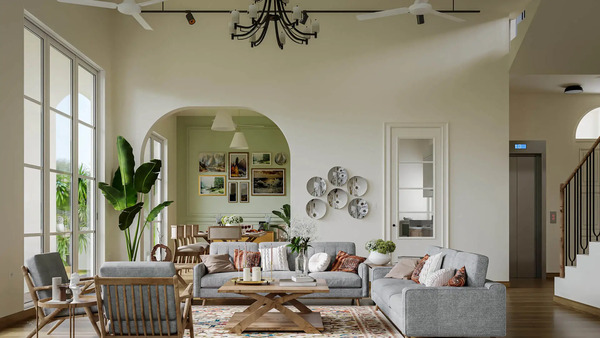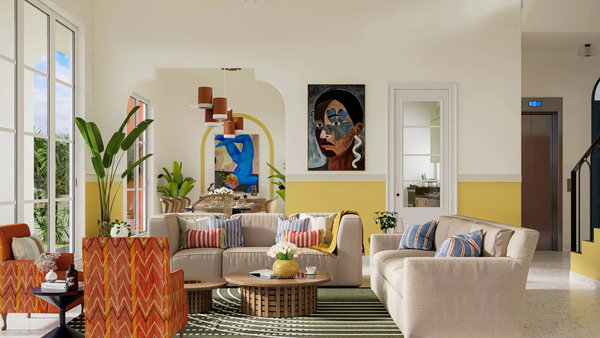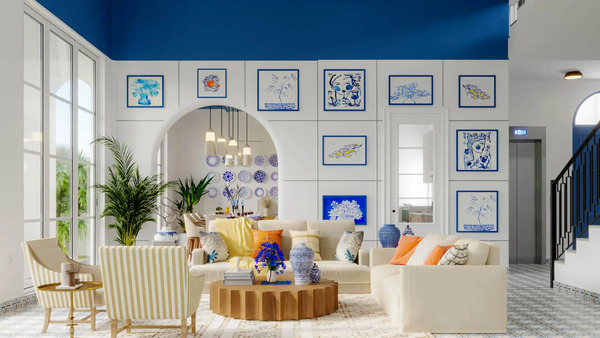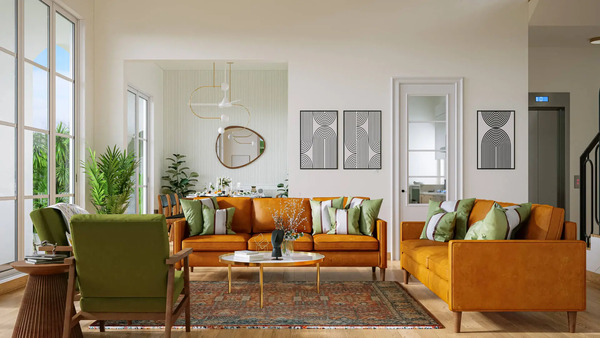
Inside the growing movement towards wellness-oriented homes, low-density living and nature-led communities.
For decades, luxury homes in India meant scale: Larger plots, taller ceilings, more square footage. The definition is shifting; the new generation of buyers are asking a different question: not how much space a home offers but how well it lets them live. This is the rise of wellness homes in India; it is reshaping how affluent HNIs, UHNIs, and NRIs think about their next significant home purchase.
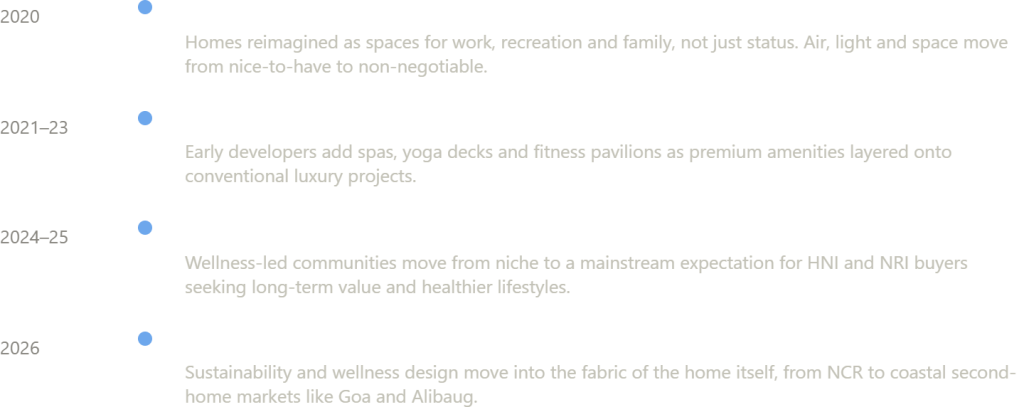
The pandemic has helped accelerate a slow-building trend. Time indoors with basic amenities like air quality, natural light, and outdoor space feels less like luxury and more like an everyday necessity. Hybrid and remote work turned homes into full-time environments rather than places to return to after a long day. For buyers thinking where to invest, wellness has become a central point in the decision.
Wellness luxury homes are no longer a niche positioning. They are fast becoming the default expectation across India’s luxury real estate market.
What is the definition of a wellness-oriented home?
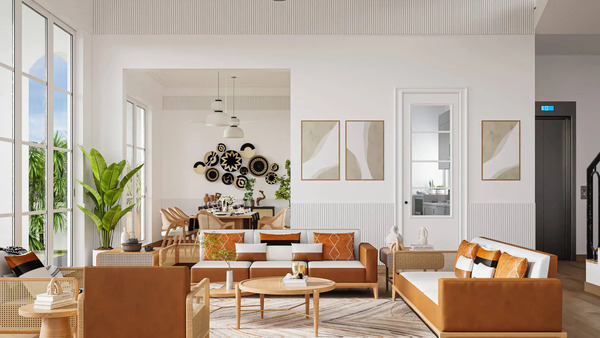
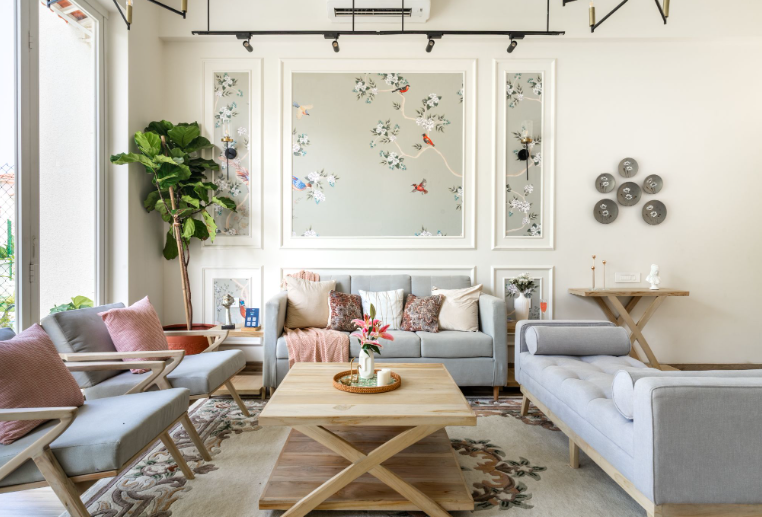
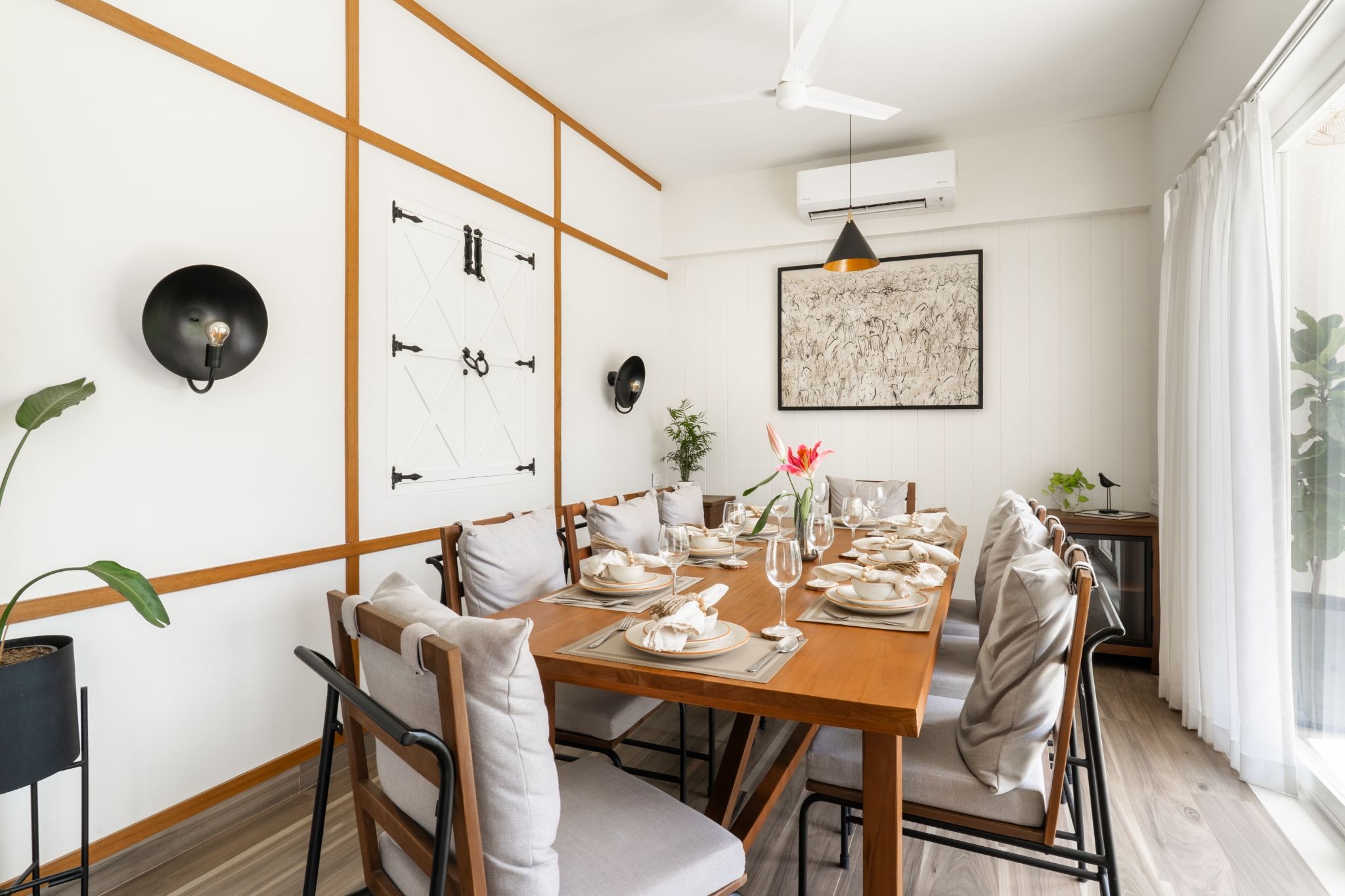
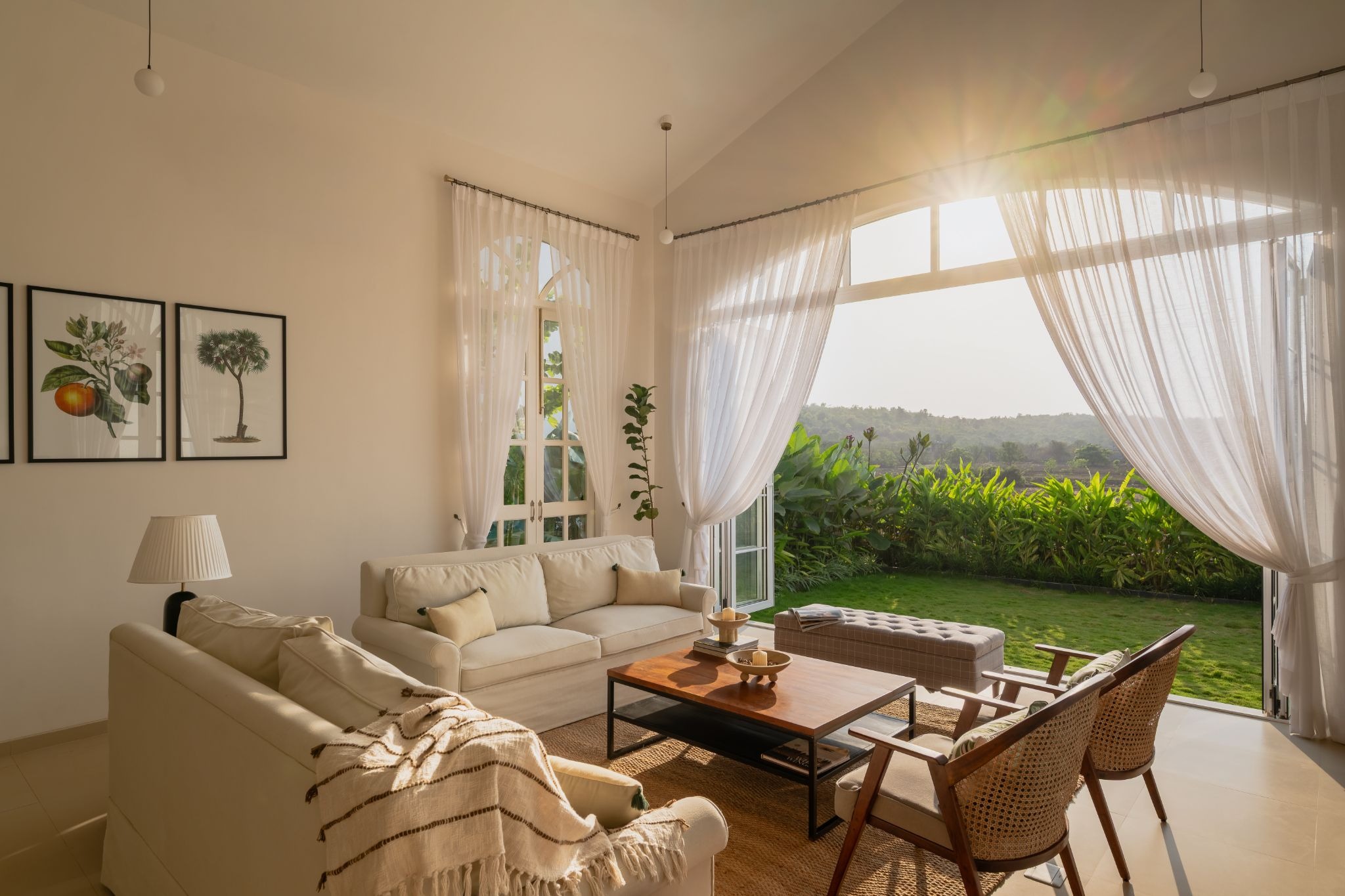
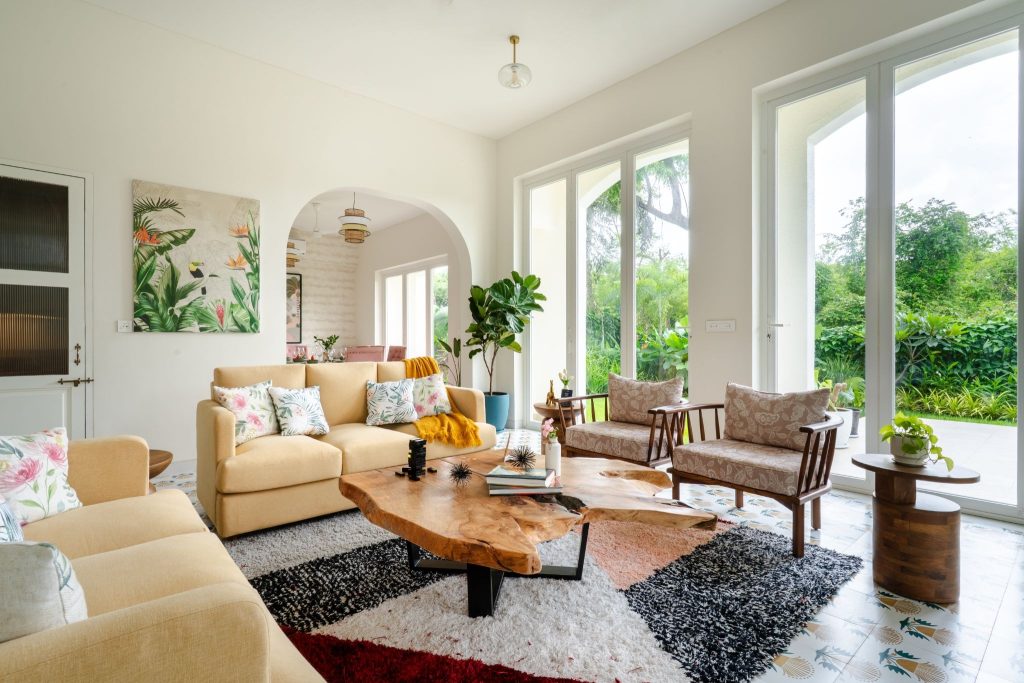
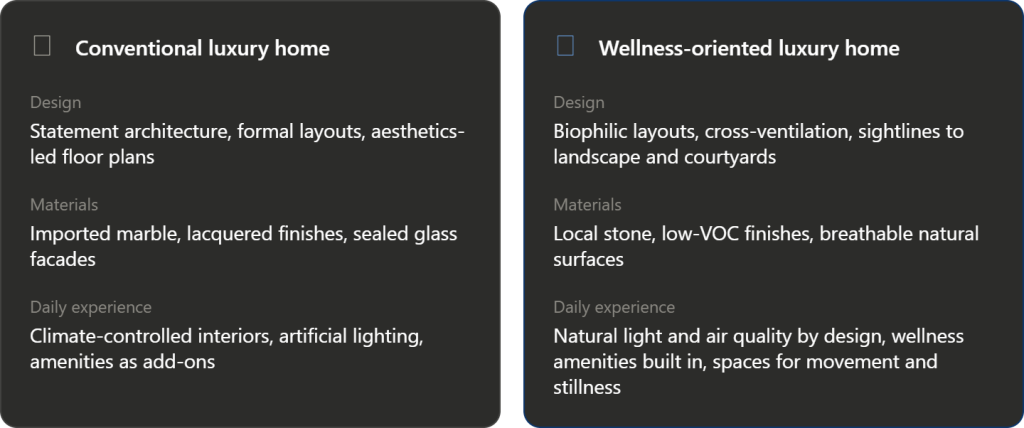
The term wellness has been thrown around loosely, so its worth and meaning are lost in translation. A wellness-oriented luxury home is built on four pillars: Physical health, mental well-being, emotional balance, and environmental harmony. In practice, this reflects as Biophilic design; homes crafted around sunlight, greenery, and natural materials. And the same principle is now driving many of India’s biophilic homes. It shows up in natural ventilation instead of relying solely on climate control. In low-density locations, luxury living gives each home a certain distance from its neighbours and helps create deliberate pockets of privacy. Along with the use of local, non-toxic, sustainable materials creates the foundation of what is slowly becoming India’s most credible sustainable luxury homes.
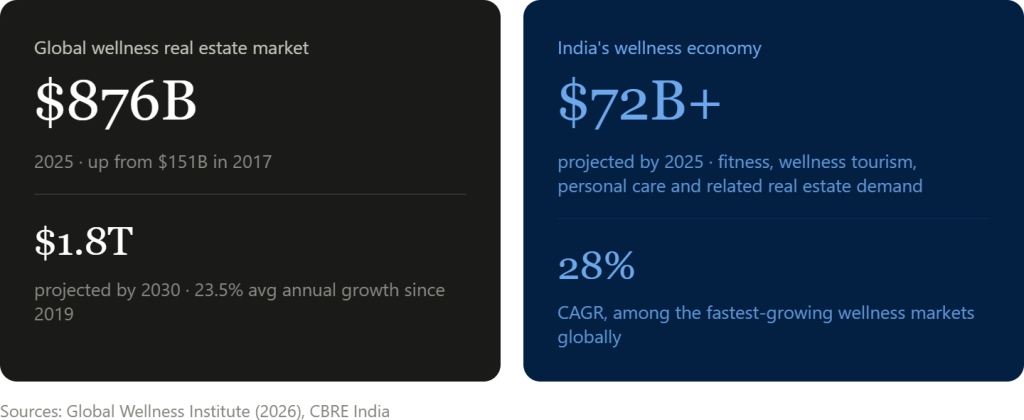
Globally, wellness architecture and design have evolved from a boutique concept to an industry standard. India is catching up quickly, especially in leisure markets where buyers are purchasing a second home rather than a private residence.
Why Demand is Accelerating Now
In recent years, a few factors are converging: Lifestyle-related health concerns such as stress, poor sleep, and sedentary living have pushed physical and mental well-being higher up the priority list for India’s HNI and UHNI households. Remote and hybrid work has made the home itself a part of your daily life, not just a place to sleep, but a space that raises the bar on what a home needs to provide. And a generational shift is underway: younger HNIs, along with NRIs re-evaluating their footprint in India, are placing the weight more on how a property makes them feel day-to-day than on its size alone.
And this reflects directly in what buyers are asking for: Private green spaces, lawns, courtyards, shaded terraces, and now an assumption that a premium add-on, part of the broader set of wellness amenities in luxury real estate that would have seemed unusual five years ago. Air and water purification systems once found mainly in hospitality are now appearing in residential briefs. So are smart lighting attuned to the circadian rhythm, soundproofed spaces for recreational activities and solar and rainwater harvesting instilled from the get-go.
The Investment Case
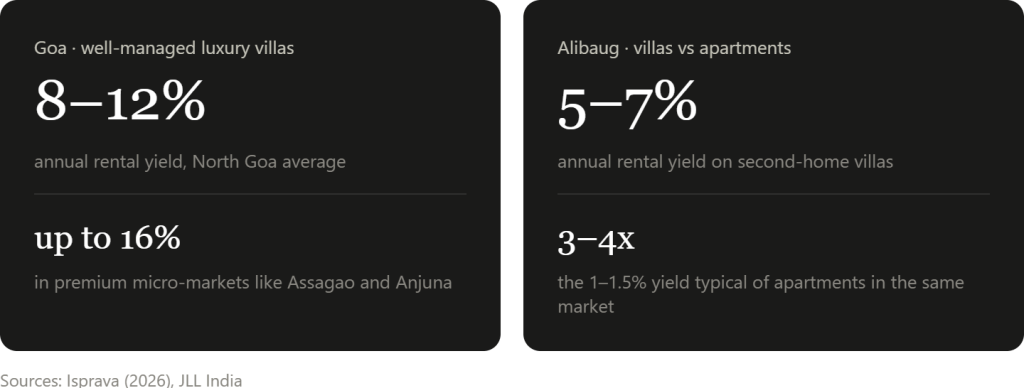
Wellness-oriented homes are just a lifestyle preference; they are proving to be a sound financial position. Homes built around genuine wellness credentials are showing stronger long-term appreciation and higher resale value. Particularly in leisure destinations like Goa and Alibaug, second-home buyers are willing to pay extra for privacy, low density and proximity to nature. Rental demand has strengthened too, as short-term guests and weekend getaways are increasingly seeking wellness-forward stays rather than standard luxury villas.
The real story here is not about the cost; it is the price it takes to sustain a certain quality of life for the family over the years. The cost of maintaining private green spaces, air and water quality, and low-density surroundings is weighed against the value of privacy, health, and time that these homes offer in return. For a discerning buyer, that is a much more honest way of thinking about ownership than a spreadsheet full of numbers.
Why is Goa leading this shift?
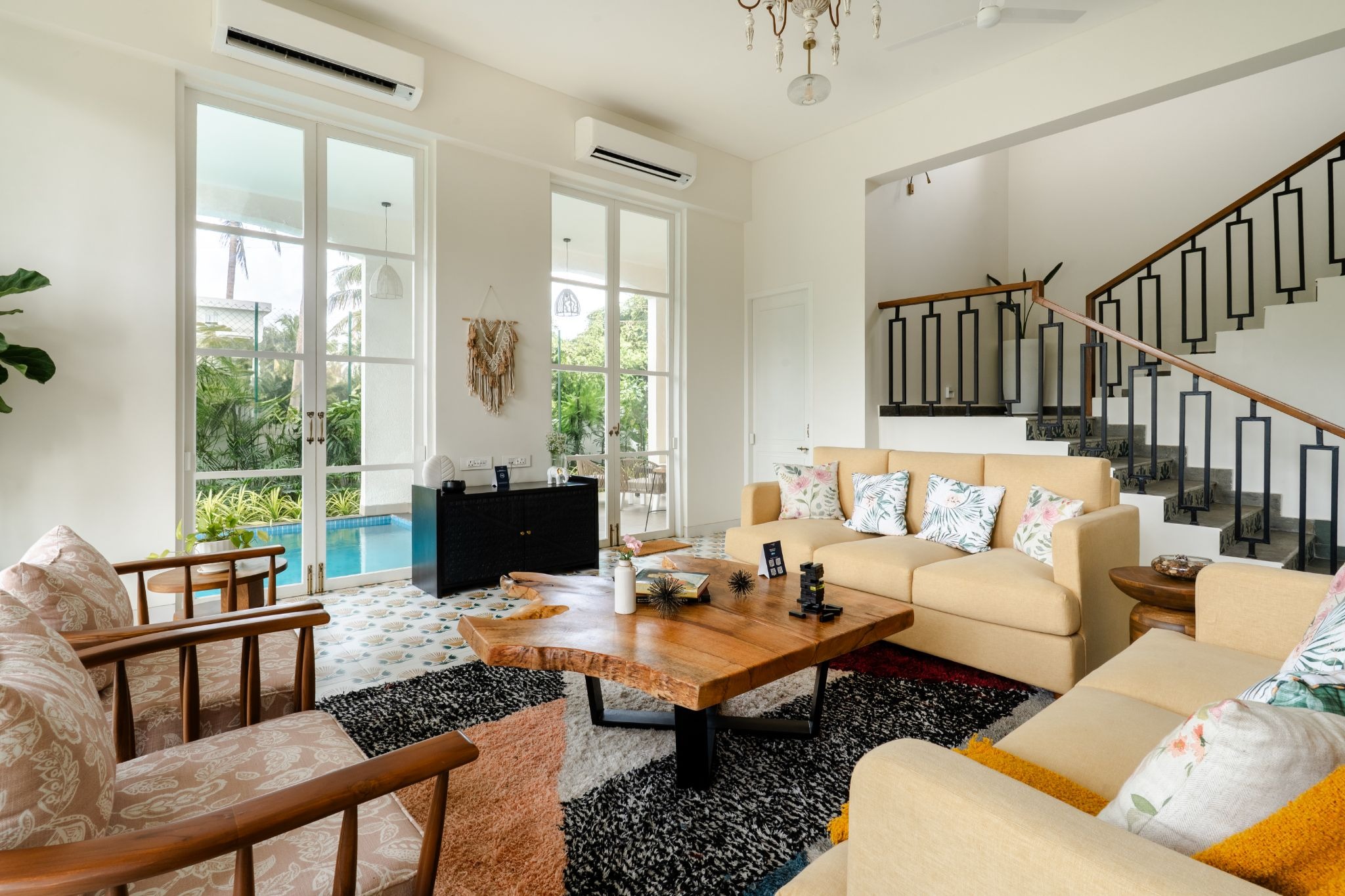
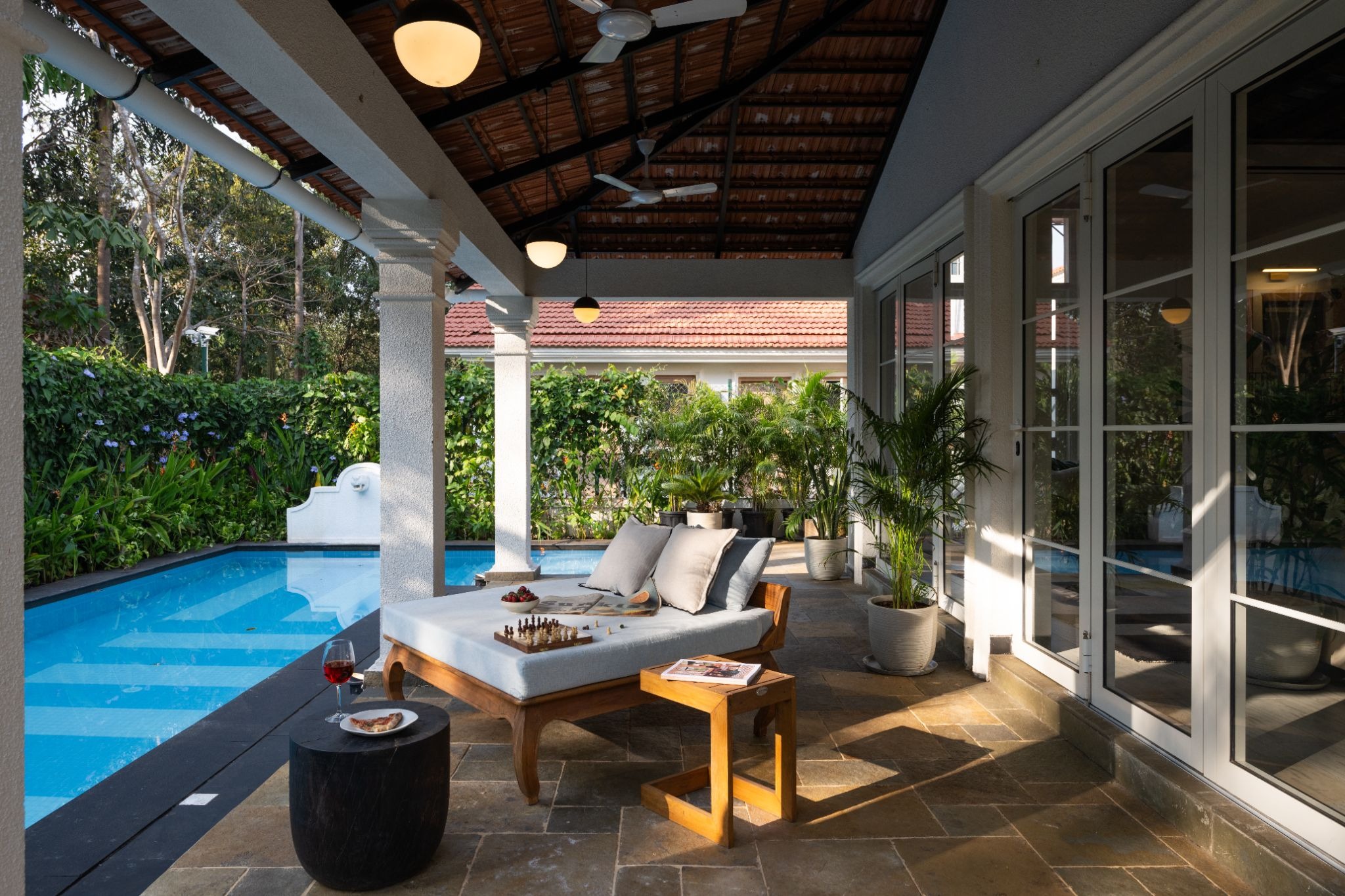
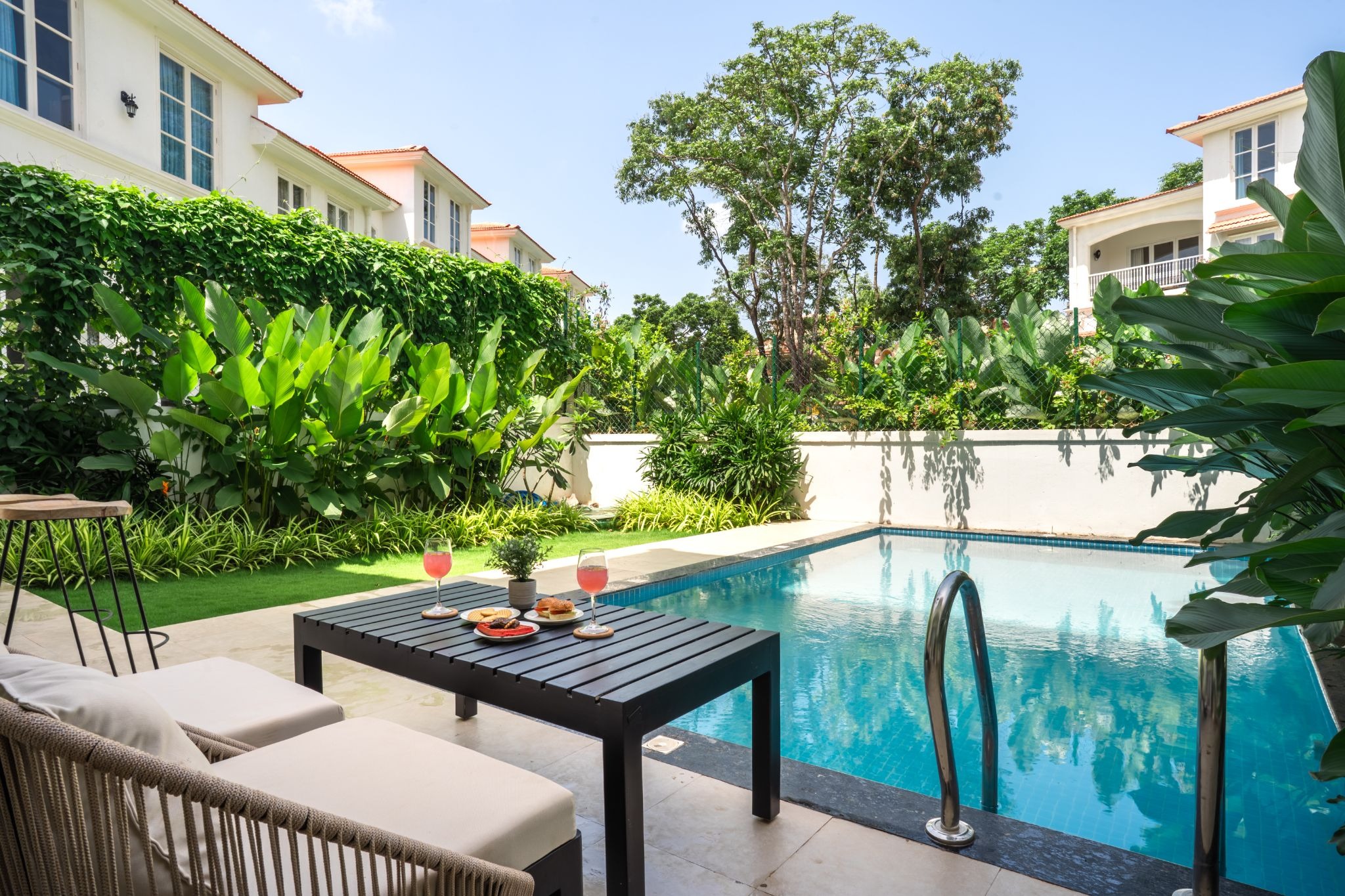
Goa is already positioned for this moment; its natural environment, complete with beaches, forest cover and clean air, gives wellness-led design something that few Indian locations can match. There is also a cultural understanding: Goa has for decades been associated with the susegad way of life. Slow living and a more balanced lifestyle, which now aligns perfectly with what wellness-focused buyers are searching for. Demand for private pool villas in Goa, along with low-density communities built around nature. Drawing HNIs, UHNIs, and NRIs who want a second home that functions as a genuine retreat. This also doubles down in the bigger picture and is a part of the nature-inspired homes across India’s leisure markets.
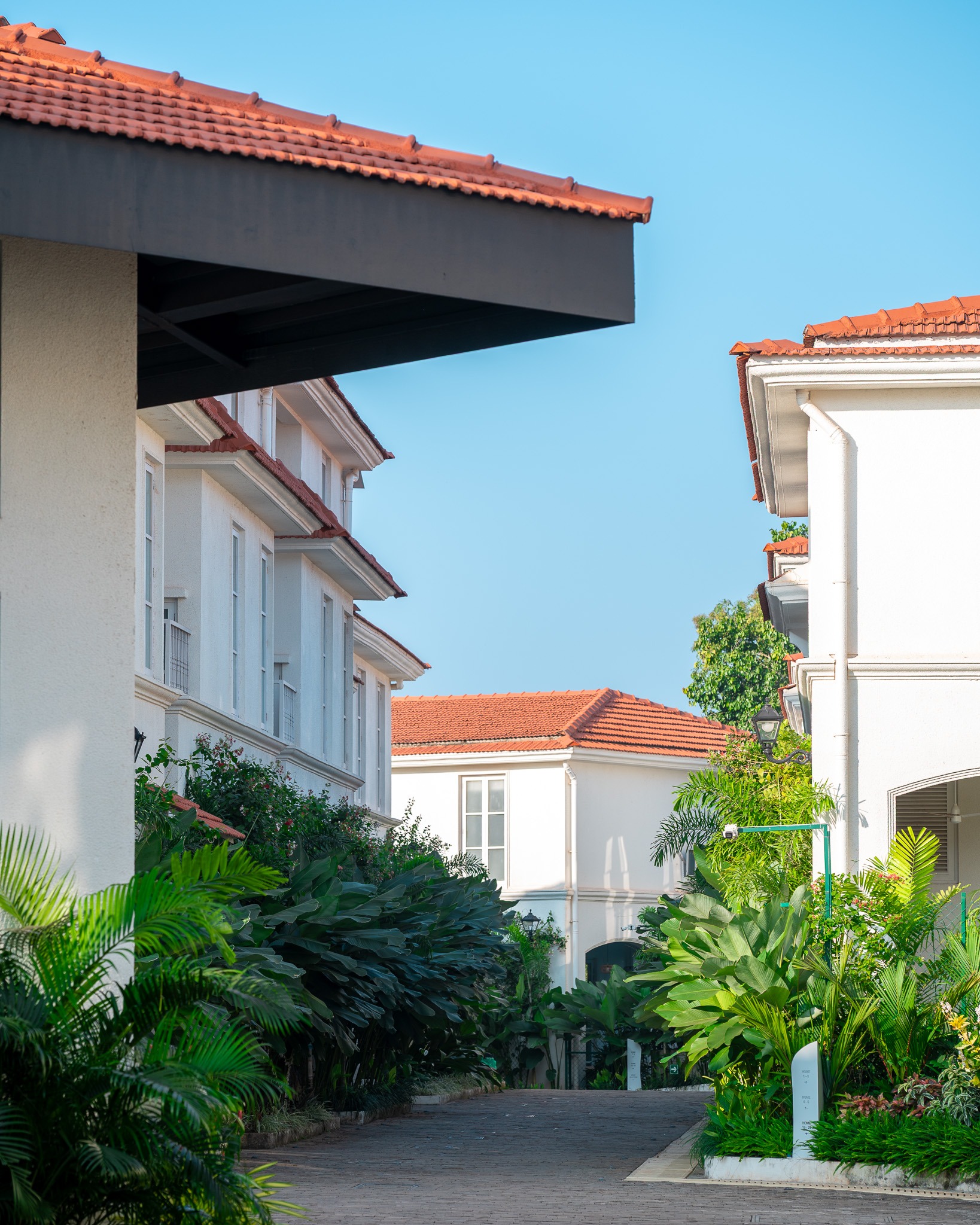
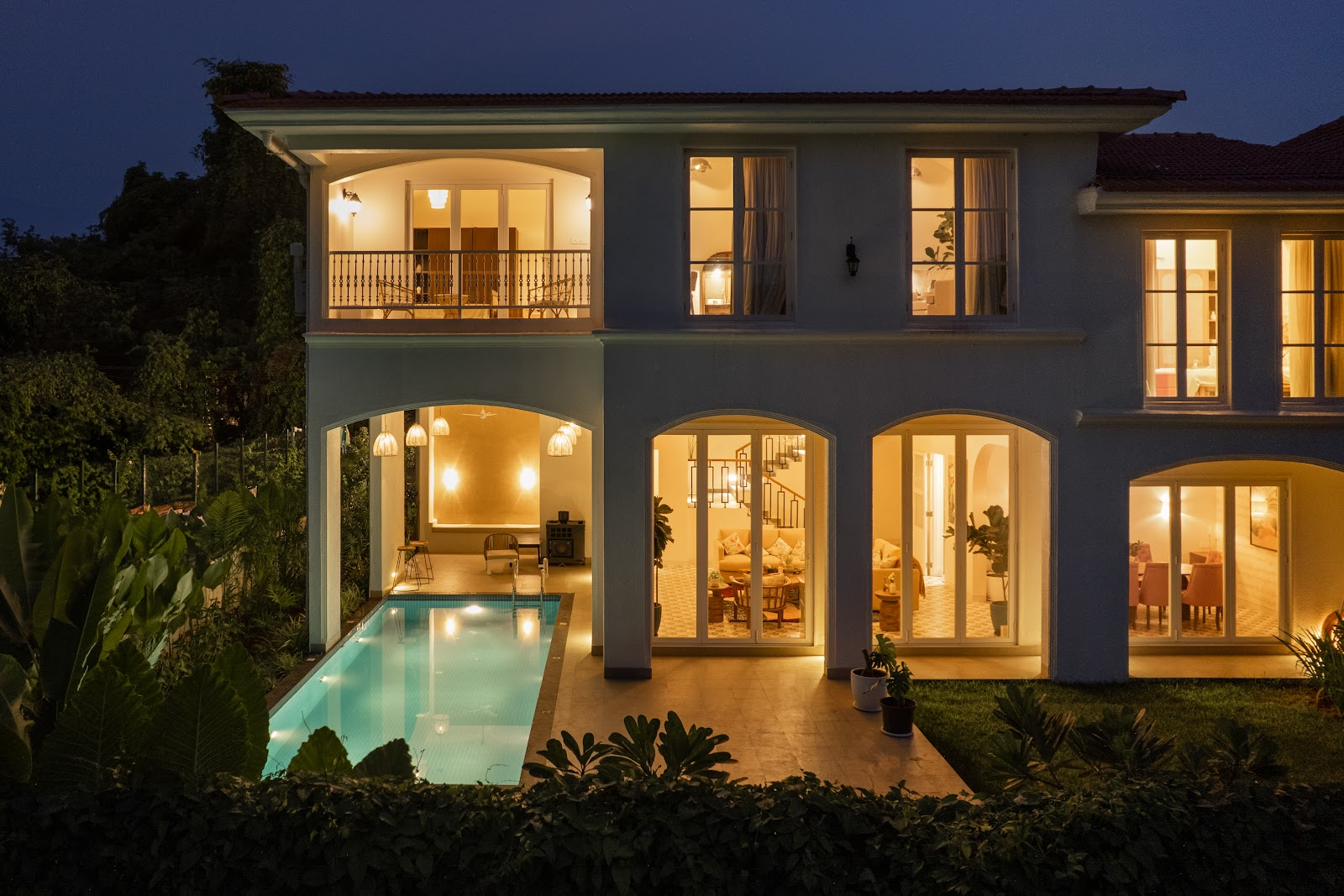
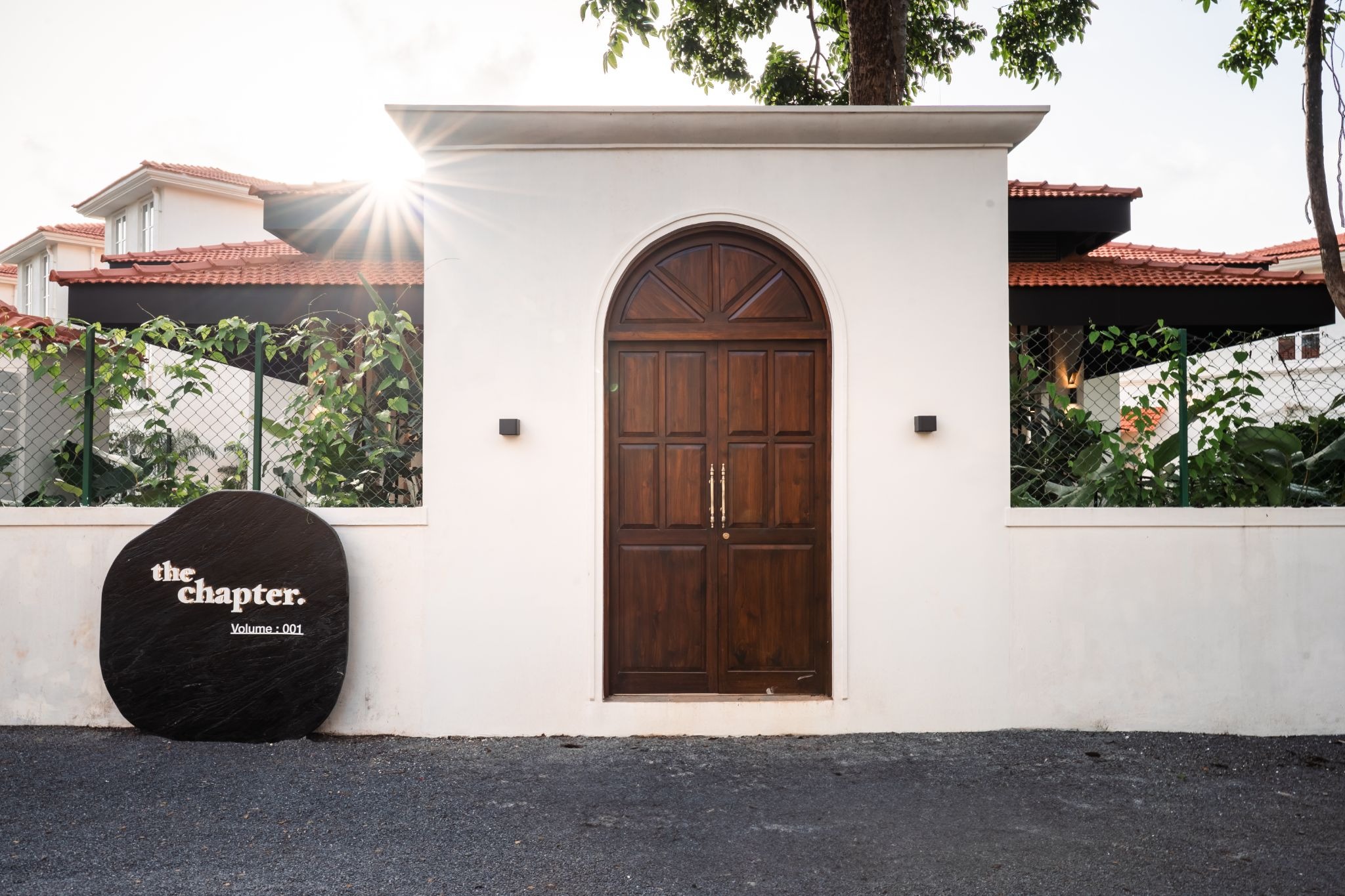
The Chapter’s approach to Goa is a clear example of low-density communities designed around the surrounding landscape rather than against it, with wellness-first features: Natural ventilation, private outdoor space, sustainable materials built into the architecture. All of this combined with smart home technology and a genuine focus on privacy. This showcases a broader wellness luxury trend not just in Goa but the second -home market across the globe.
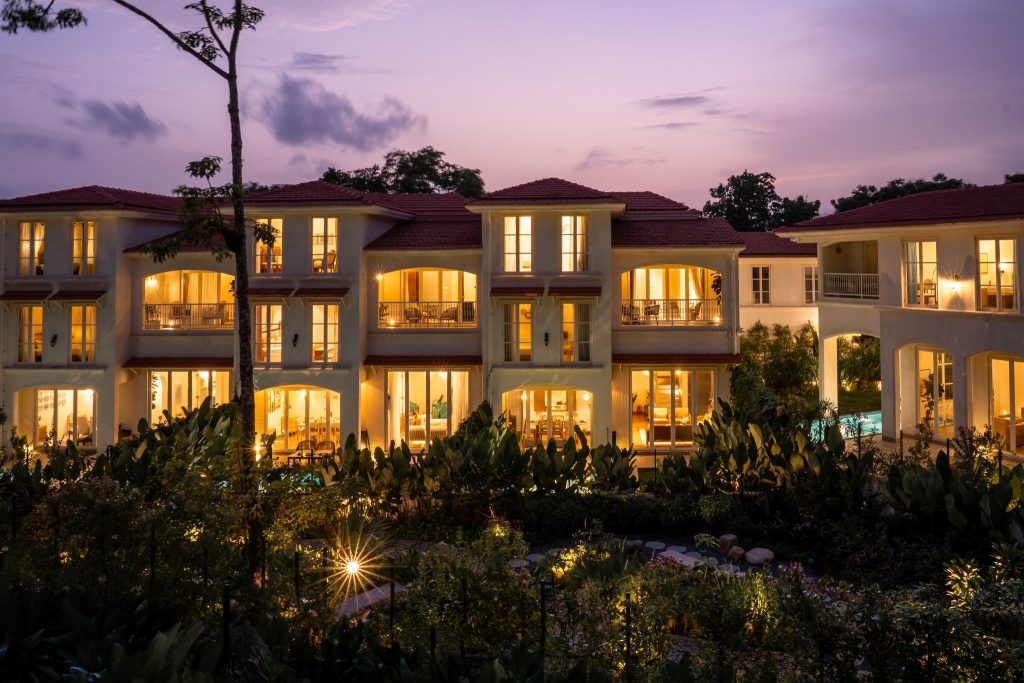
The next phase of growth looks to be moving beyond the metros and the established leisure markets. Extending into Alibaug, Coonoor, and Kasauli, where nature is the backdrop to your home, and homes are private yet placed within the pulse of the locations.
The Takeaway
Wellness-oriented luxury here is not a passing trend; it is a genuine shift in what homeowners are expecting. The question posed is no longer whether a property looks luxurious but if it helps support a more balanced lifestyle.