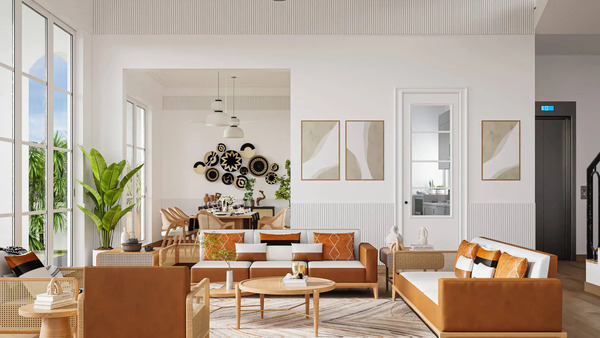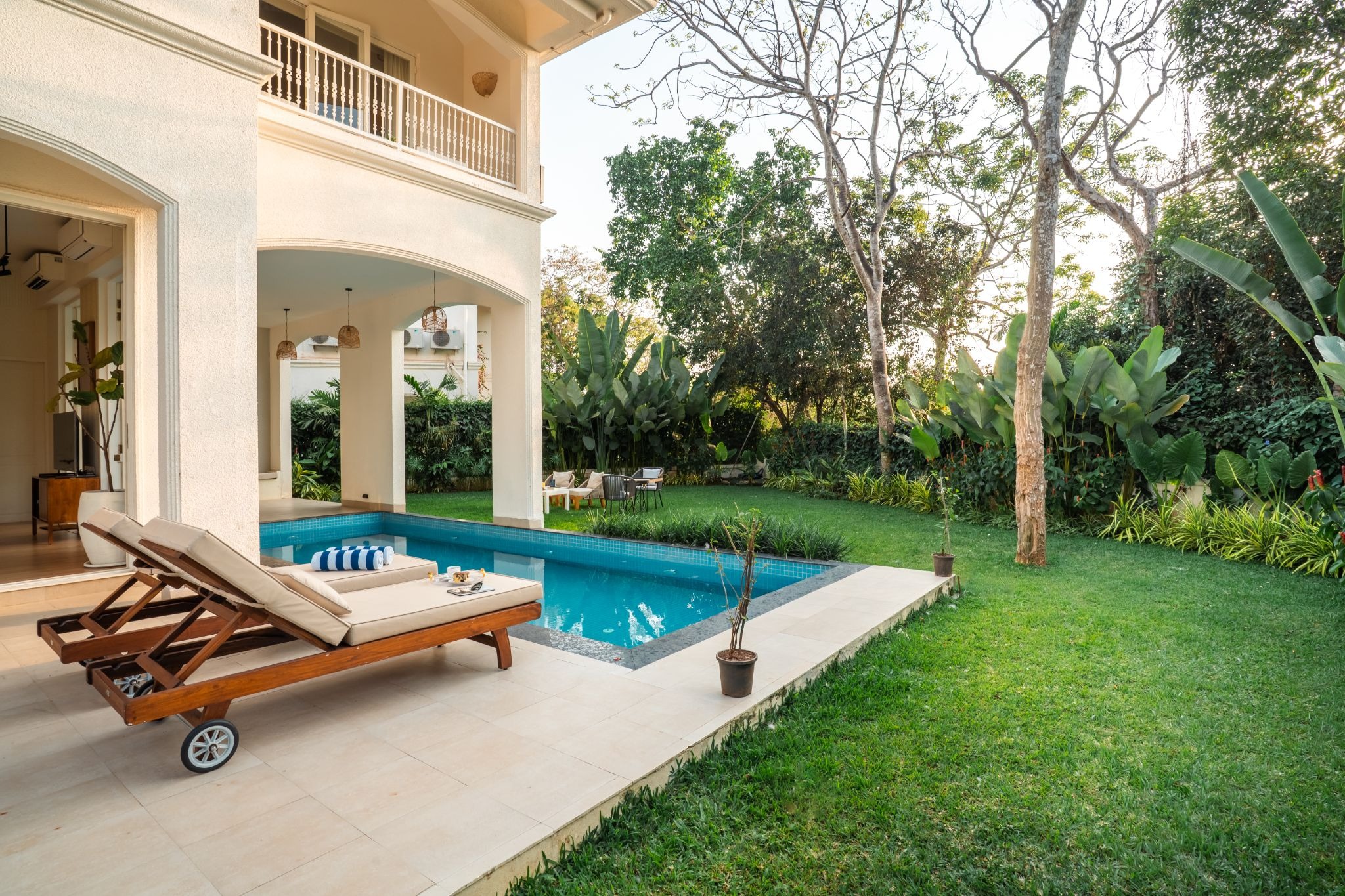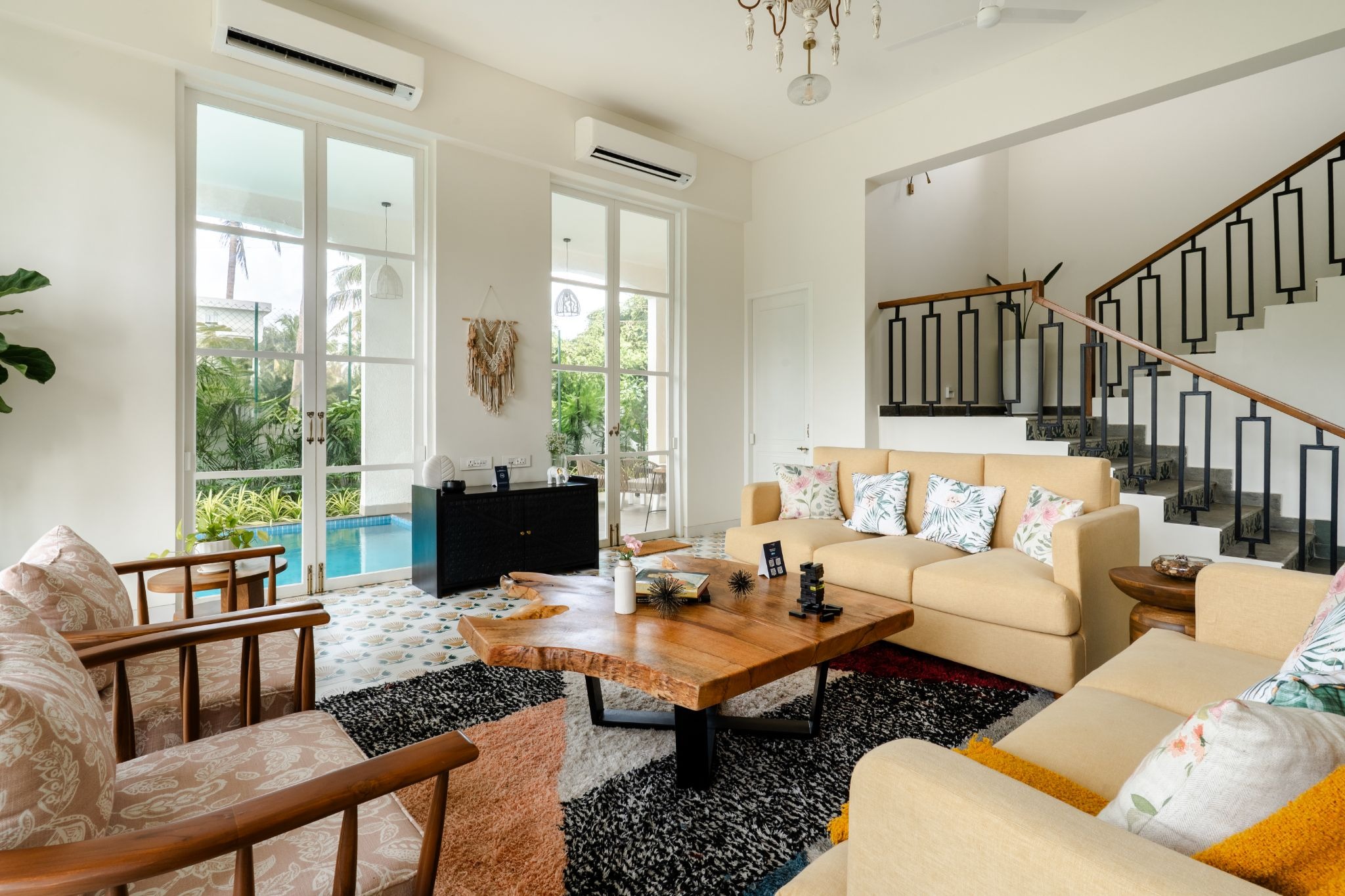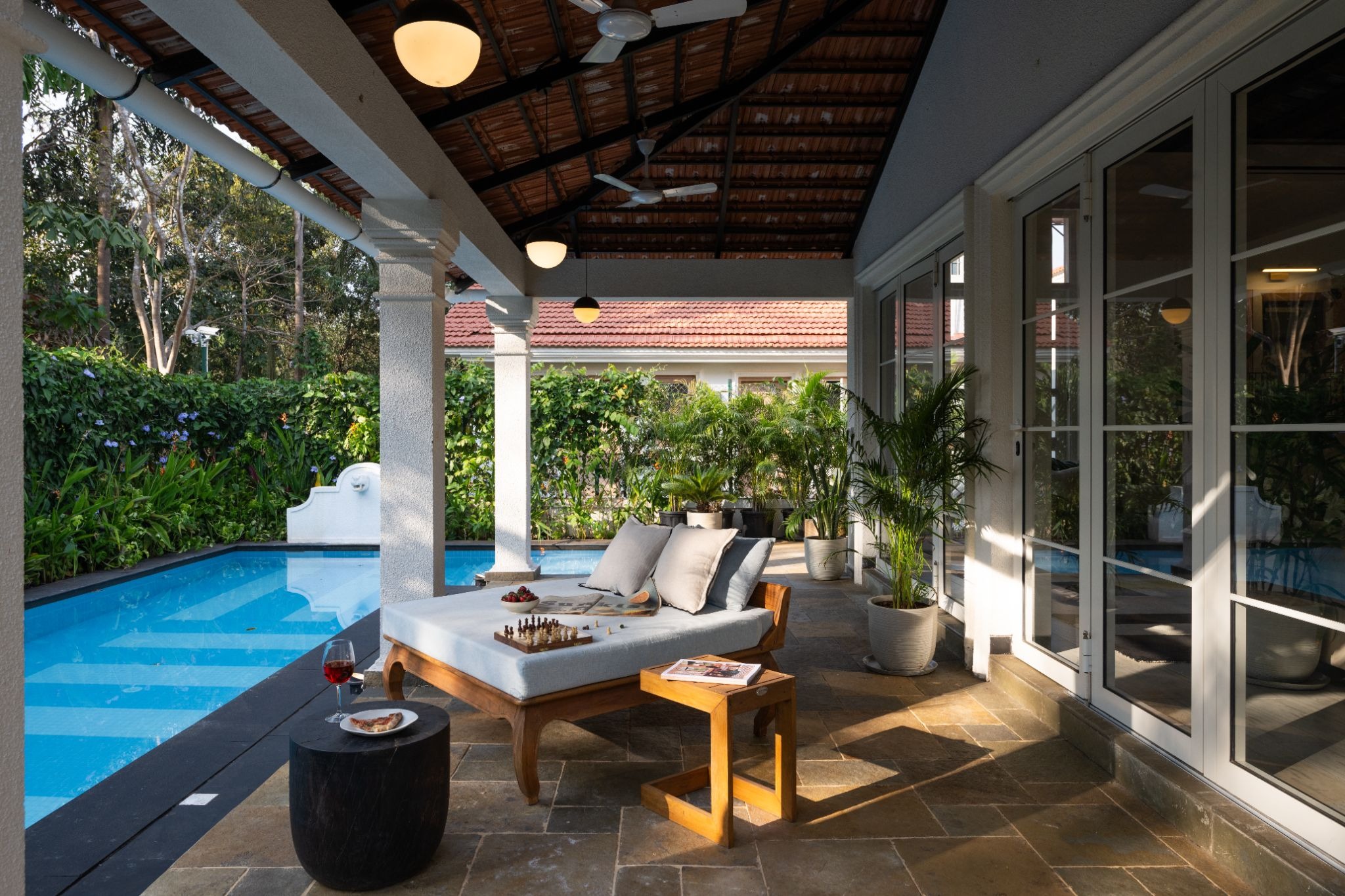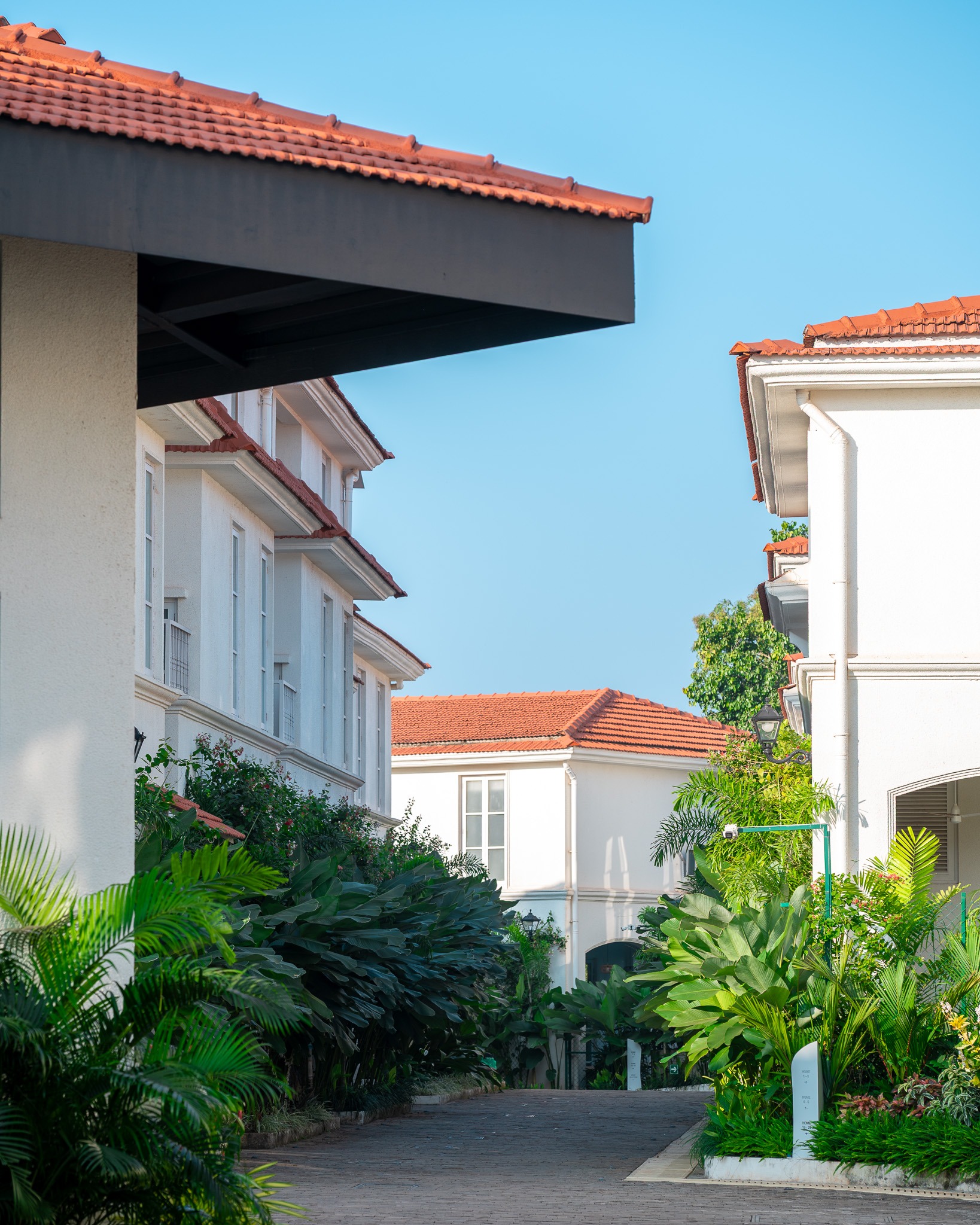

Beyond appreciation and returns, discover a home that offers healthier living, meaningful time together, and lasting value for generations
Why India’s most discerning homeowners are looking beyond the city, and finding something better in Goa. There is a shift happening in India’s most affluent households, and it has very little to do with real estate trends. It has everything to do with air.
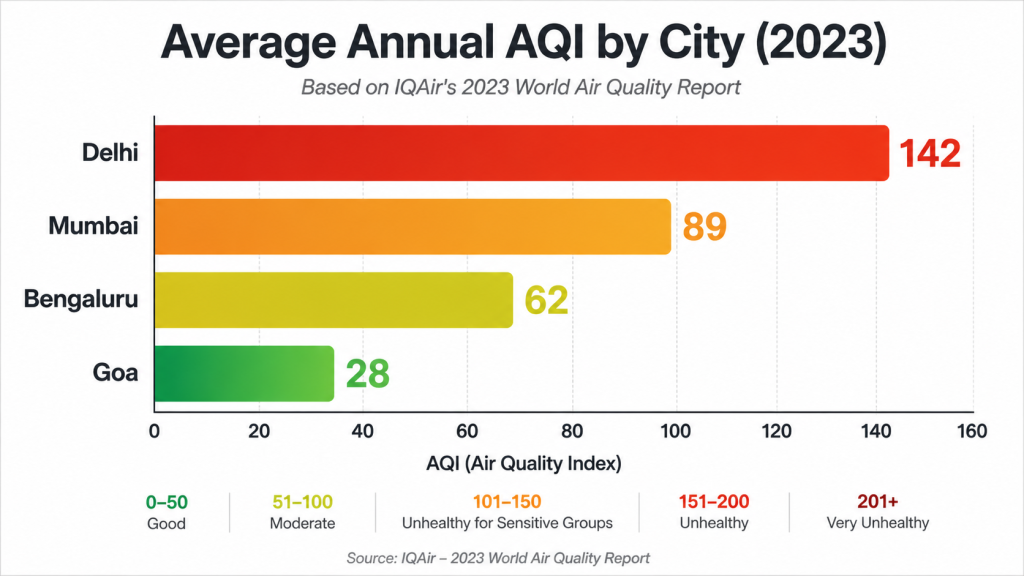
In Delhi, the AQI regularly crosses 300 during winter months. In Mumbai, even on moderate days, the air quality index rarely dips below 100. A level the WHO classifies as unhealthy for sensitive groups. These are not anomalies. They are the new baseline. And for a growing number of families, this baseline has become the single most important factor reshaping where they choose to spend their time and where they choose to own.
The second home is no longer a luxury purchase. For many, it has become a considered response to a city that has quietly stopped delivering on the quality of life it once promised.

The Air Quality Crisis Driving a New Kind of Migration
India is home to 39 of the world’s 50 most polluted cities, according to the 2023 World Air Quality Report. Delhi and Mumbai consistently rank among the worst, with fine particulate matter (PM2.5) levels that exceed safe limits for the majority of the year.
What makes this more urgent is what the science increasingly confirms: there is no safe level of long-term PM2.5 exposure. Chronic exposure has been linked to cardiovascular disease, respiratory illness, reduced cognitive function in children, and a measurable decrease in life expectancy. The Indian Council of Medical Research estimates that air pollution is responsible for approximately 1.67 million deaths in India annually.
This is no longer background noise. It has entered the conversation at dinner tables, school meetings, and annual health check-ups. And for families who have the means to act, it is driving a quiet but determined migration not necessarily out of the city entirely, but toward a second base where the air is simply better.
Goa’s AQI, by comparison, routinely sits between 20 and 50 well within the “Good” category. The reasons are structural: low industrial density, expansive green cover, coastal wind patterns, and a population that remains among the lowest per square kilometre of any Indian state.
The Changing Profile of the Second Homeowner
The archetype of the second homeowner has changed significantly over the past decade. What was once the domain of retirees and weekend warriors has shifted toward active professionals, young families, and entrepreneurs. People who are not stepping away from their careers but redefining where those careers are lived.
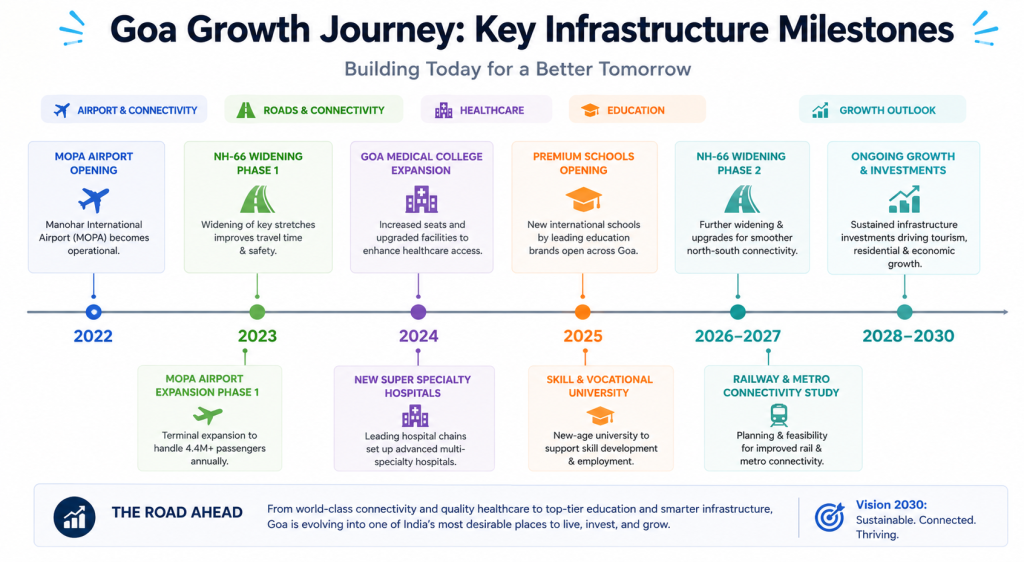
Remote and hybrid work, now structurally embedded in many industries post-2020, has fundamentally altered the calculus. When you are not required to be in an office five days a week, the question of where you live becomes genuinely open. A flight from Goa to Mumbai takes under an hour and a half. The new MOPA International Airport has cut travel times from North Goa dramatically, making the state far more accessible for working professionals who need to move between both locations with regularity.
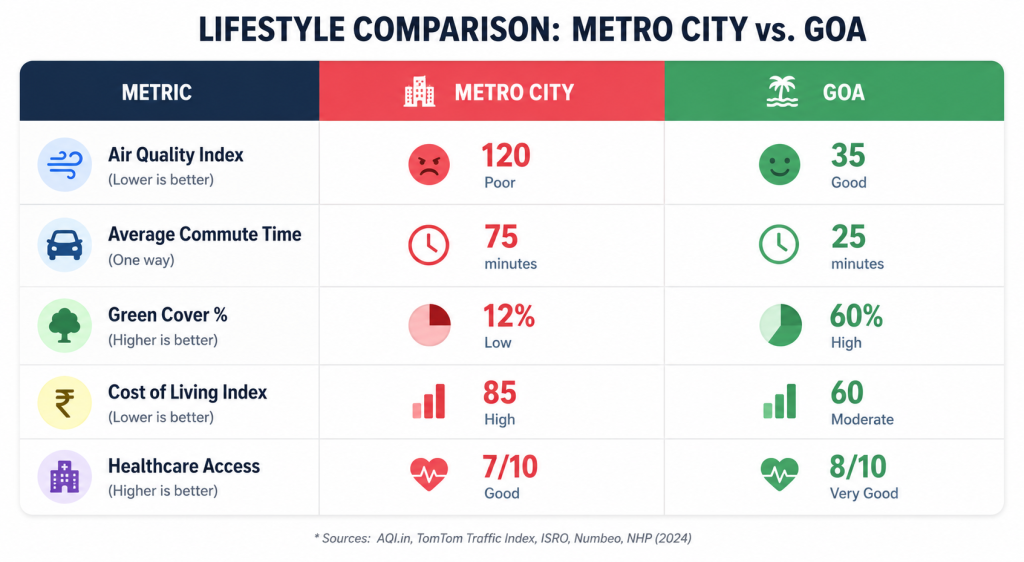
What this has created is a new category of homeowner: someone who does not choose between the city and the coast, but operates across both. For this buyer, the second home is not a holiday retreat. It is a functional base, equipped with co-working spaces, reliable connectivity, and proximity to schools and healthcare that happens to offer a measurably better quality of life than their primary residence.
The infrastructure has kept pace. Goa now hosts international schools, multi-speciality hospitals, a growing startup and entrepreneurial community, and an improving road network. The state’s appeal has broadened well beyond tourism. It is, increasingly, a place people come to live, not just visit.
What Ownership in Goa Actually Delivers
When evaluating a second home, most buyers begin with price per square foot and rental yield. These are reasonable starting points. But the more considered question is: what does this asset actually deliver across its lifetime of ownership?
In Goa, the answer is multi-layered
From a financial standpoint, the state has seen sustained capital appreciation, particularly in North Goa markets like Assagao, Siolim, Moira, and now emerging corridors around MOPA. The luxury and premium villa segment has seen year-on-year price appreciation of 15–20% in certain pockets over the last three years, driven by limited developable land, growing demand from domestic HNI buyers, and increasing interest from the NRI community.

But the more meaningful return is harder to quantify. It is the reduction in healthcare costs that come from cleaner living. It is the developmental benefit to children who spend extended periods in greener, less congested environments. It is the psychological dividend of a home that feels genuinely restorative not just a change of scene, but a change in how you feel.
There is also an intergenerational dimension that sophisticated buyers are beginning to factor in. A well-located, well-designed home in Goa is an asset that appreciates in both monetary and lifestyle terms something that can be held, enjoyed, and eventually passed on, in a location where land supply is constrained and demand is structurally rising.
The question is less “can I afford this?” and more “what am I forgoing if I don’t?”
Goa as a Long-Term Address, Not Just a Destination
The next five years will likely accelerate what is already underway. As Indian cities continue to grow in density and the environmental pressures that come with that growth, the premium on clean, well-designed living environments will only increase.
Goa’s fundamentals are well-positioned for this shift. The MOPA airport expansion is drawing more direct international connections. Infrastructure investment in the state continues to grow. And unlike many hill stations or coastal destinations that face seasonal access limitations, Goa functions year-round with a climate, connectivity, and social ecosystem that support long-term, not just seasonal, residence.
The concept of Susegad; a Goan philosophy of finding one’s own rhythm, of unhurried, contented living is less a cultural curiosity and more an increasingly aspirational model for people exhausted by the velocity of metro life. It is not about slowing down. It is about living at a pace that is chosen rather than imposed.
For discerning buyers, what Goa offers is not an escape from ambition. It is an environment in which a well-designed life can actually be lived, where the morning does not begin with an air quality alert, where children play outside, where the weekend does not require a flight to find open sky.
The most enduring investments are rarely just financial. They are decisions that improve how you live, how your family grows, and what you leave behind.
A second home in Goa, positioned thoughtfully and designed well, delivers on both dimensions. The numbers make sense. But more importantly, the life it makes possible makes sense in a way that a city-bound existence, measured in AQI readings and traffic hours, increasingly does not.

The air is cleaner here. And for more people each year, that is reason enough.
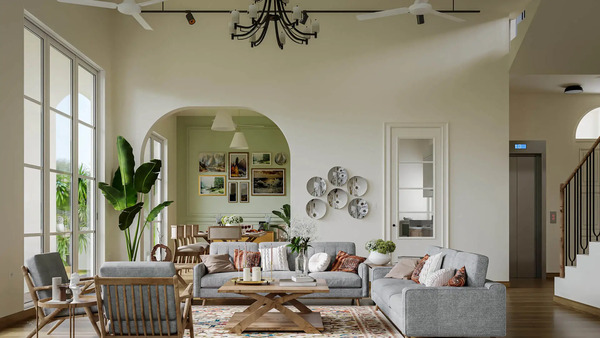
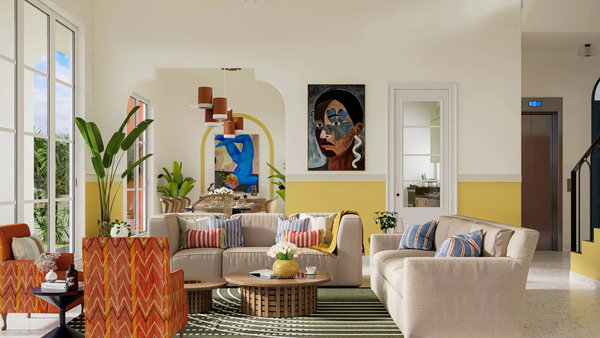
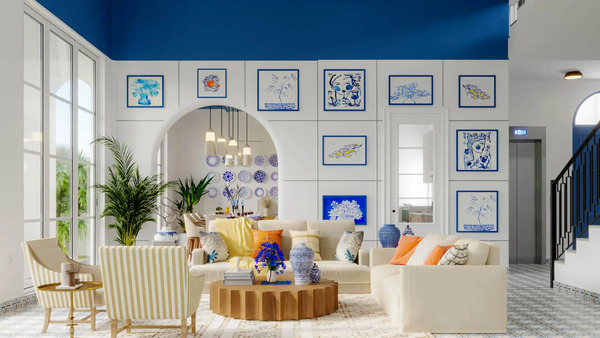
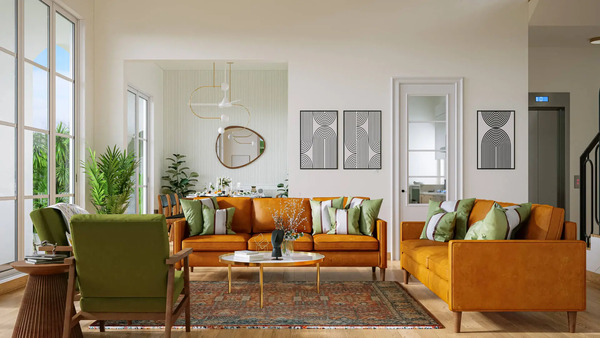
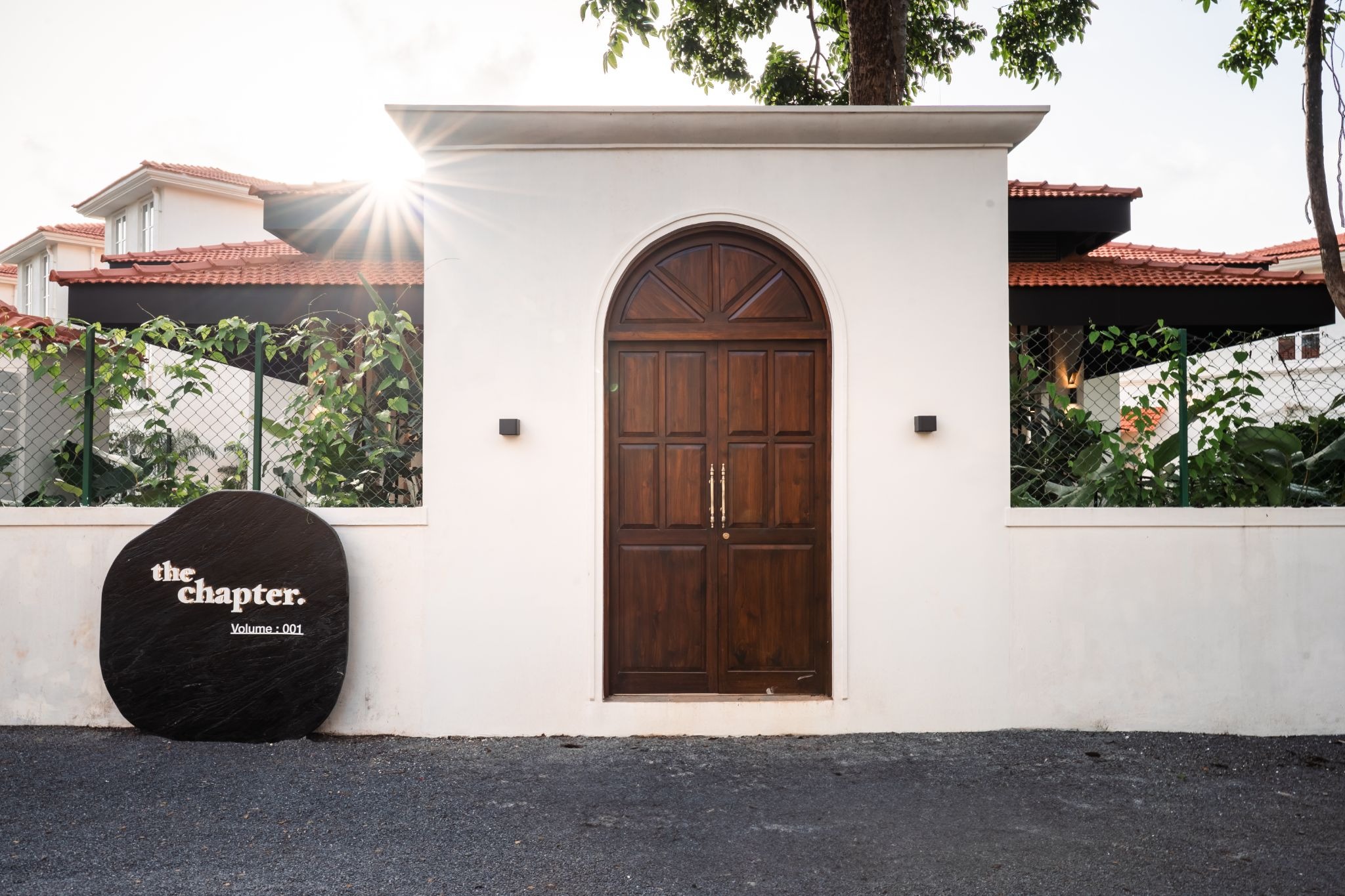
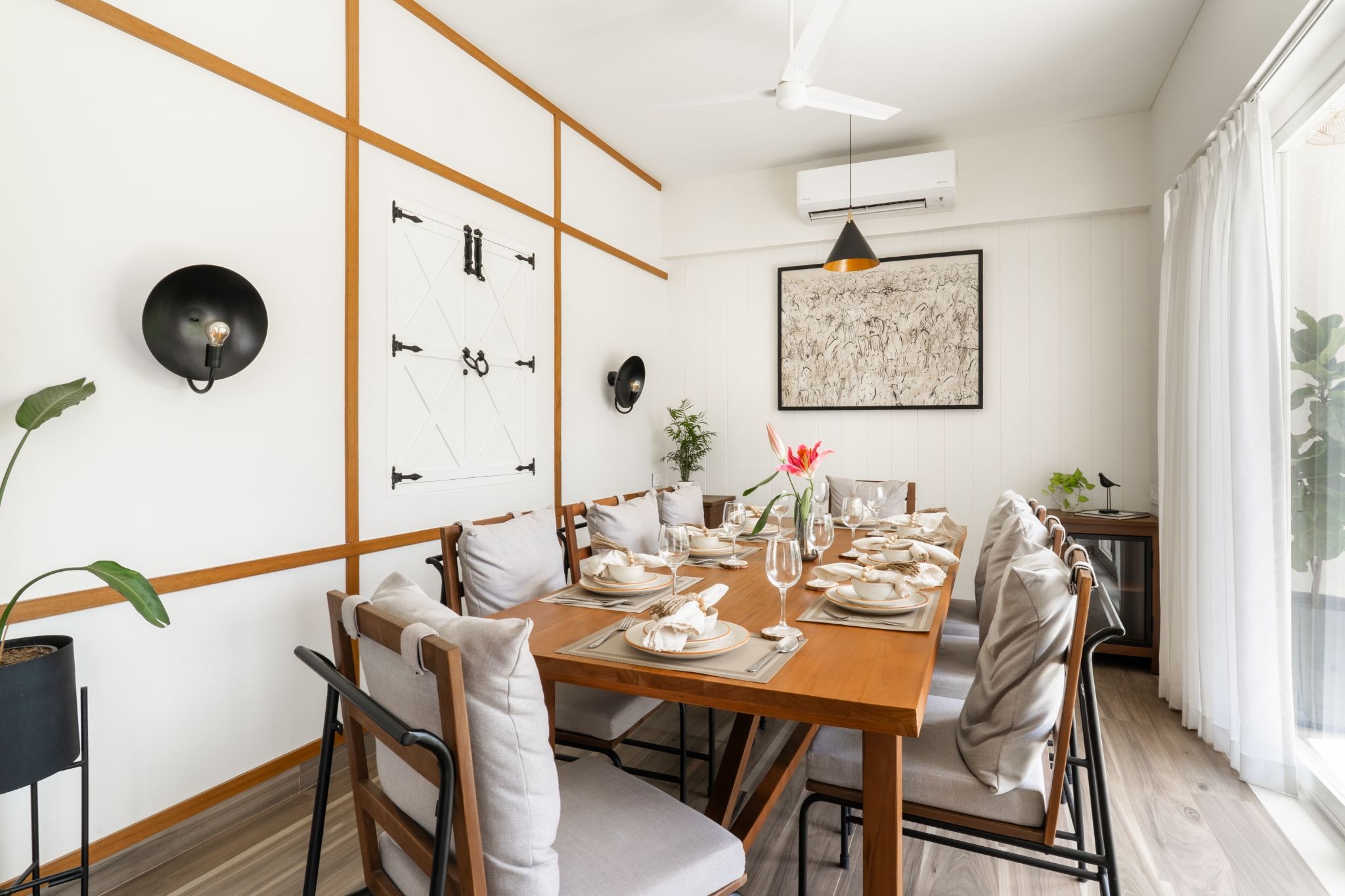
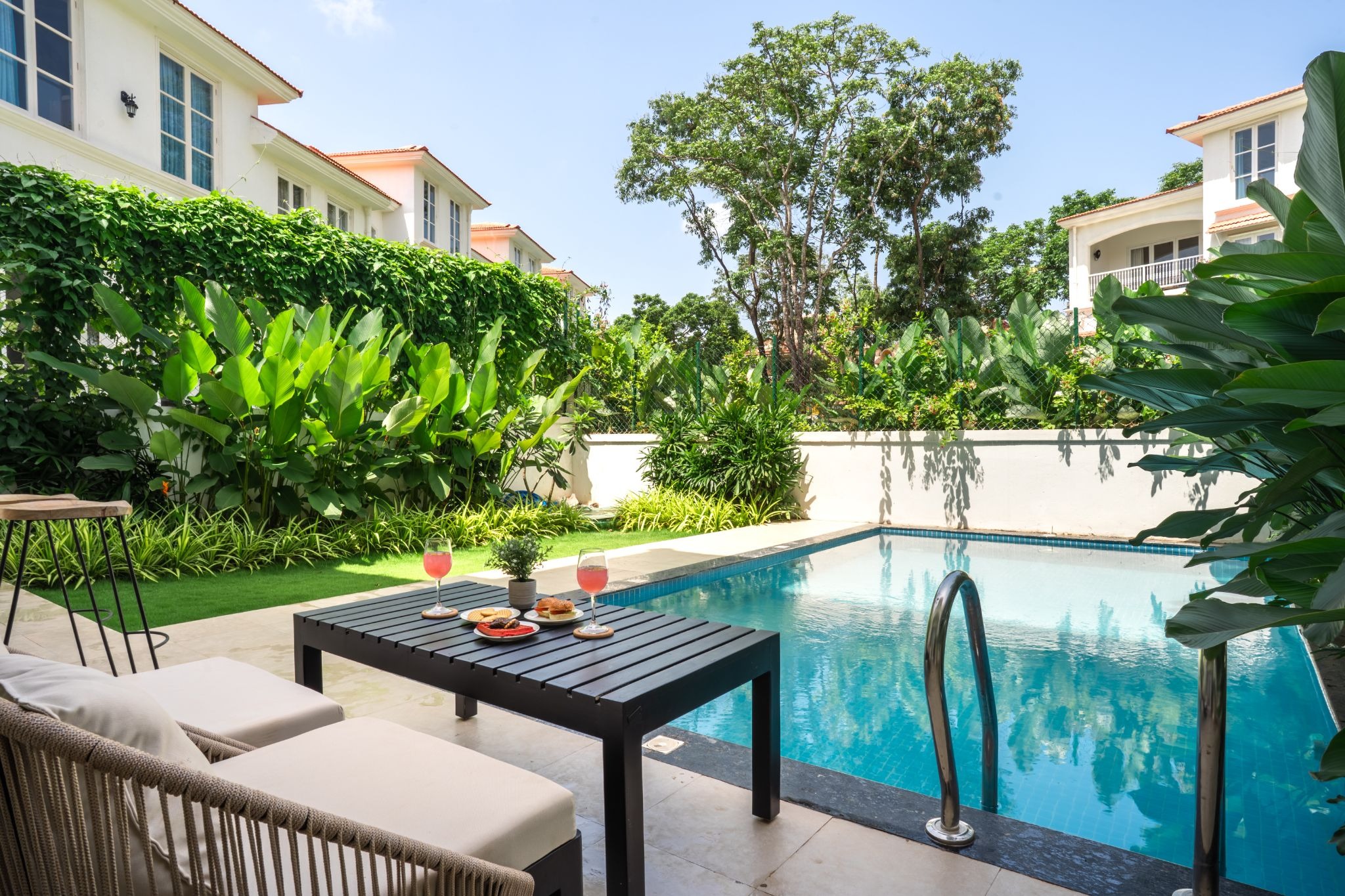
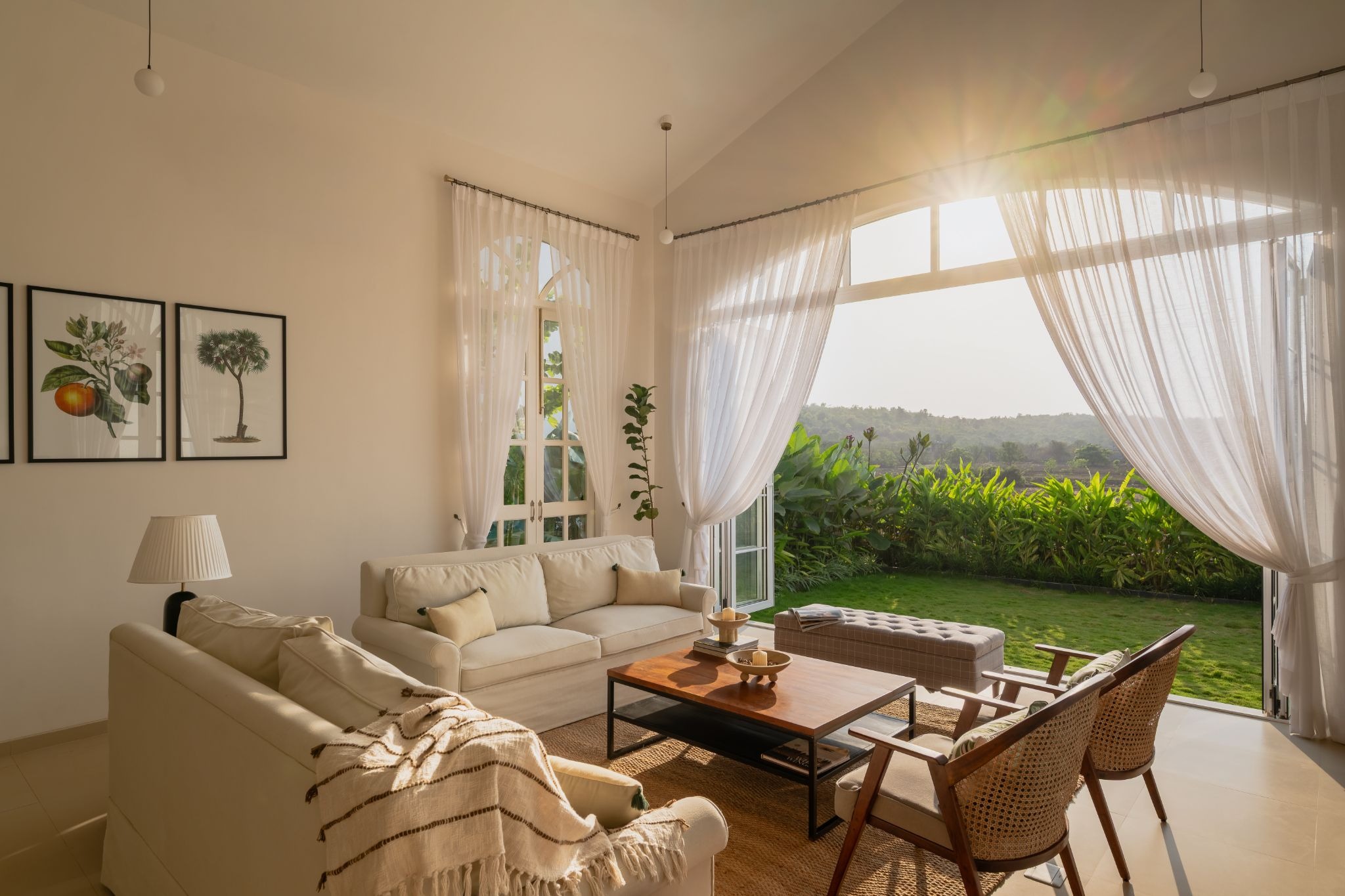
The Chapter designs communities across Goa for those who value intentional living; homes built with natural light, ventilation, and a considered sense of place. Volume 003 – Sircaim is located near the MOPA International Airport, surrounded by lush landscapes with access to North Goa’s beaches and cultural centres.